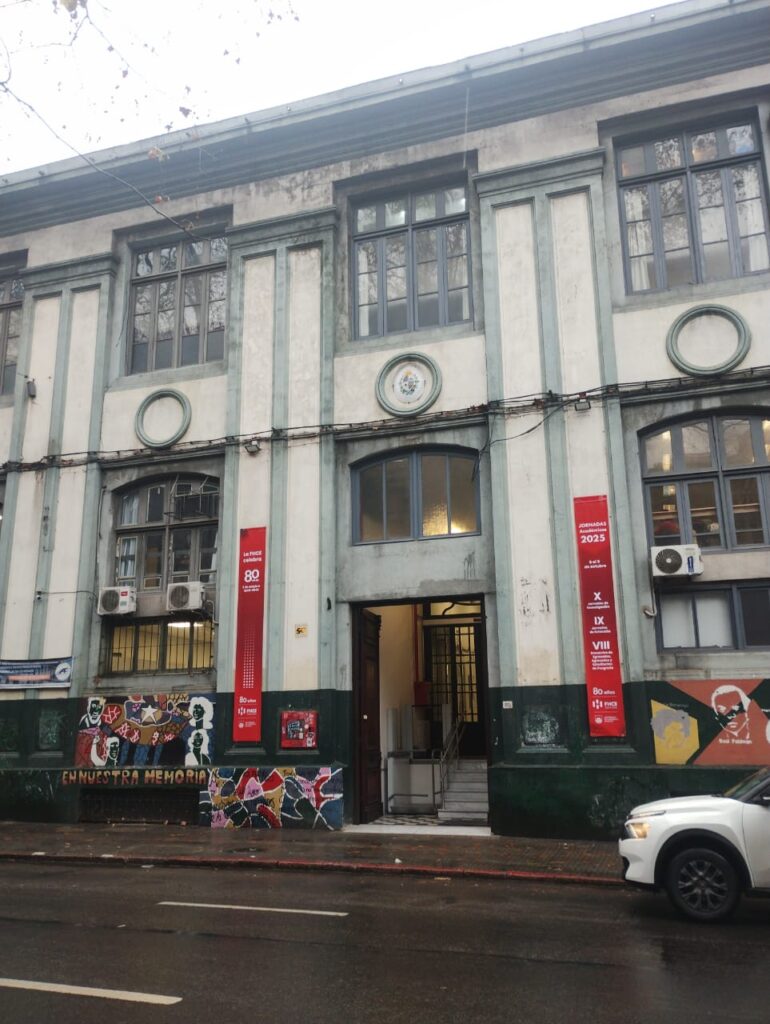
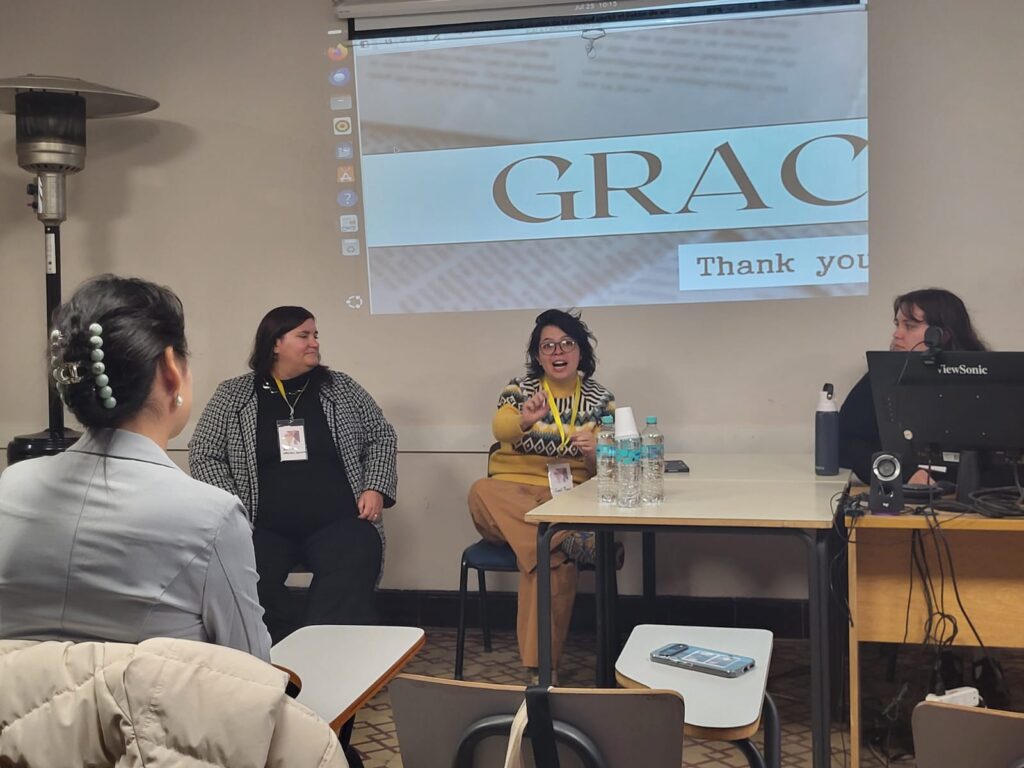
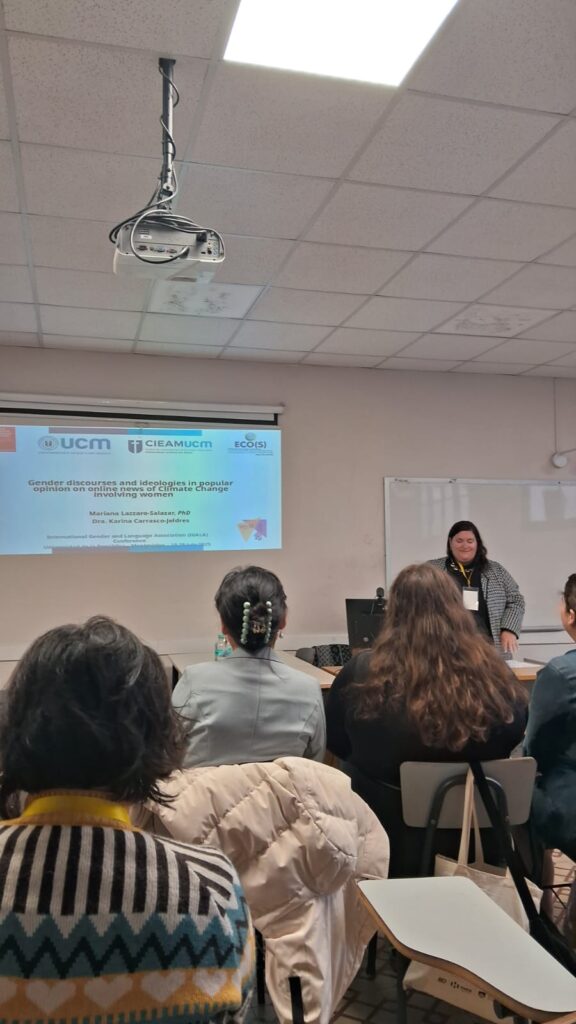
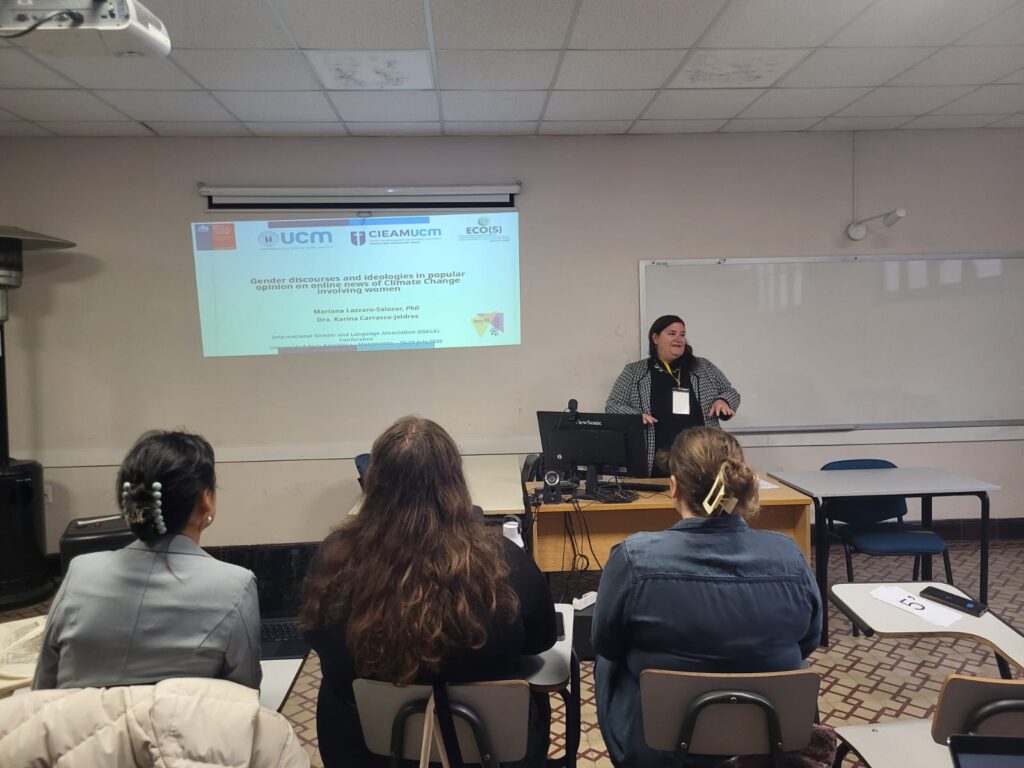
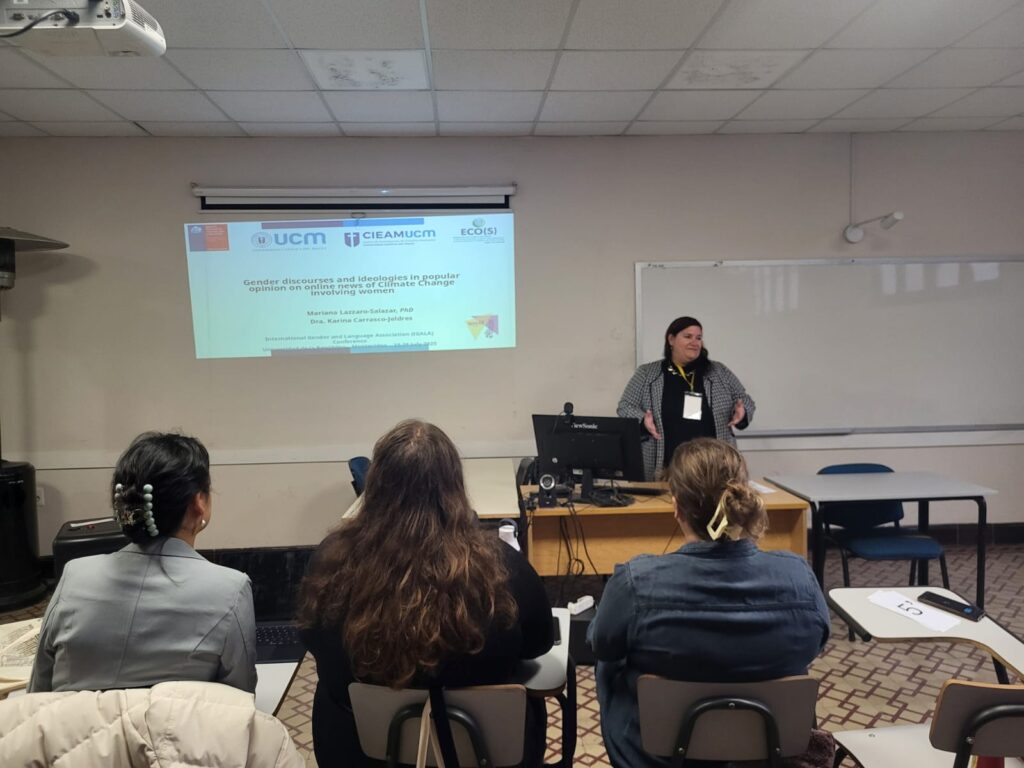
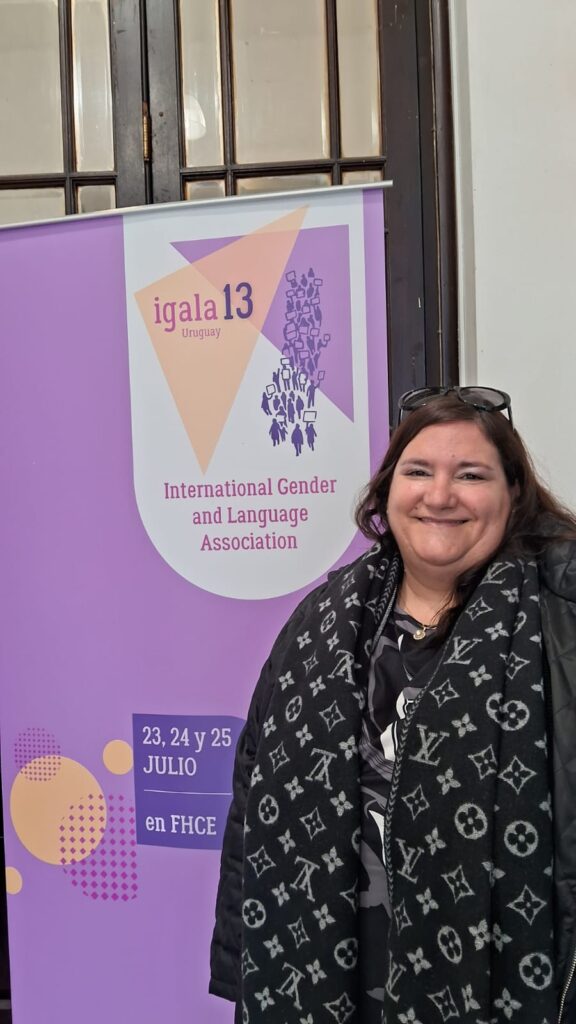
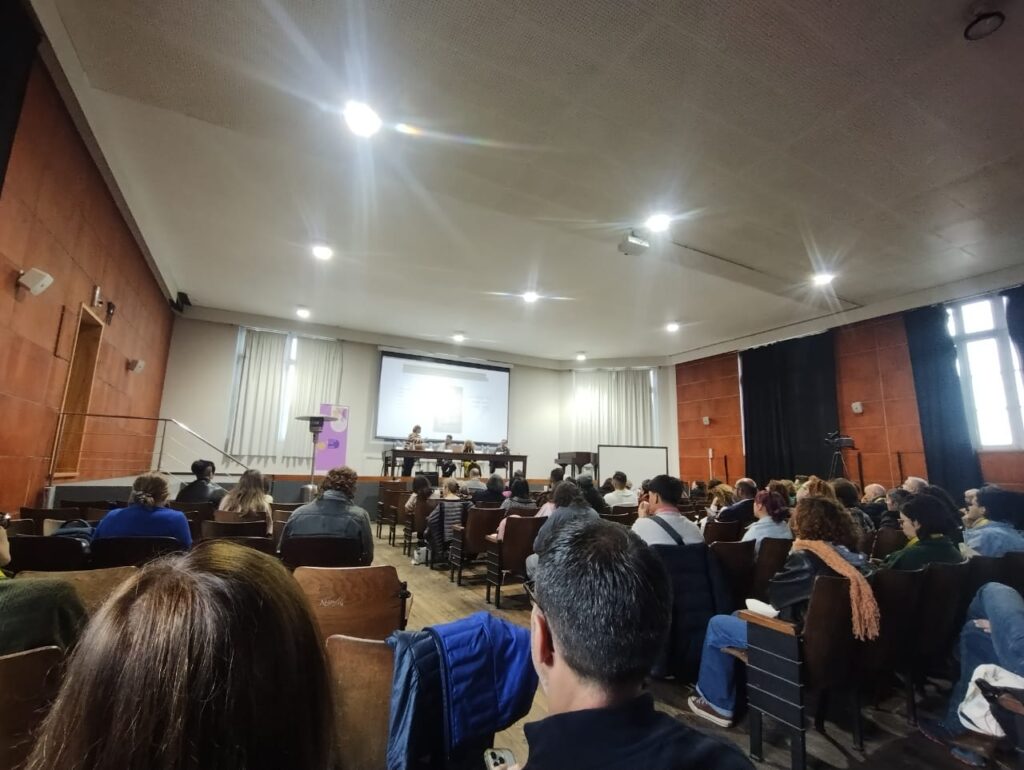
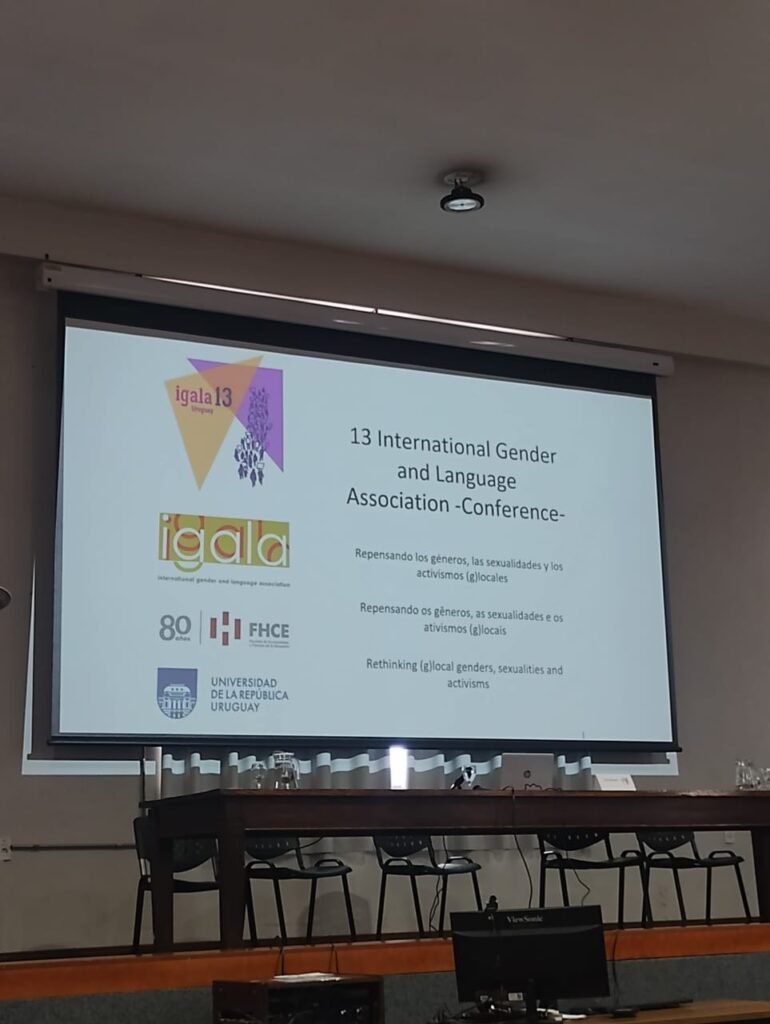
El 25 de julio de 2025, en el marco del XIII Congreso de la International Language and Gender Association (IGALA13), celebrado en la Universidad de la República, Uruguay, las investigadoras de la Universidad Católica del Maule (UCM), Dra. Mariana Lazzaro-Salazar (académica y directora alterna del Proyecto Anillos ANID ATE230028) y Karina Carrasco Jeldres (profesional del Proyecto Anillos ANID ATE230028), presentaron la ponencia titulada “Gender discourses and ideologies in popular opinion on online news of Climate Change involving women” [“Discursos e ideologías de género en la opinión popular sobre noticias en línea sobre el cambio climático que involucran a mujeres”]. Esta exposición fue parte del simposio “Grupos Minoritarios”, centrado en prácticas discursivas que reproducen y disputan desigualdades estructurales.
La investigación se enmarca en el proyecto interdisciplinario ANID ATE230028 (“Biodiversidad de la costa a las montañas: Un estudio socioambiental de las prácticas (eco)culturales de comunidades rurales en un escenario de cambio climático”), que articula saberes provenientes de la ecología, la sociolingüística, la antropología y las humanidades ambientales. En esta línea, el estudio presentado busca indagar cómo se configuran y reproducen las ideologías de género en la opinión popular expresada en medios digitales sobre noticias que vinculan el cambio climático con mujeres.
Tradicionalmente, los discursos científicos y de política pública han enmarcado a las mujeres desde dos grandes metanarrativas: como sujetos vulnerables, por ser desproporcionadamente afectadas por eventos climáticos extremos, y como sujetosvirtuosos, debido a su mayor inclinación hacia prácticas sostenibles. No obstante, estos posicionamientos suelen ser rearticulados, cuestionados o reforzados en los entornos digitales donde se expresan las voces de una diversidad de usuarios. A través de estos espacios se manifiestan ideologías de género culturalmente situadas, con efectos concretos en la forma en que las mujeres son percibidas, juzgadas o excluidas del debate climático.
Para abordar este fenómeno, las investigadoras adoptaron un enfoque metodológico de netnografía humanista, el cual combina herramientas del análisis crítico del discurso con una aproximación etnográfica a las culturas digitales. El corpus analizado consistió en opiniones de usuarios (comentarios y respuestas) en noticias publicadas entre 2019 y 2024 por los principales medios online de Chile (Emol y La Tercera), así como reacciones a esas mismas noticias publicadas en la red social X (antes Twitter).
El análisis, situado dentro del marco de la sociolingüística interaccional y crítica, permitió identificar patrones lingüísticos y estrategias discursivas que sostienen imaginarios sociales y representaciones naturalizadas del rol de las mujeres en la crisis climática. Entre los hallazgos, destaca la persistencia de estereotipos de género, la utilización de marcadores de deslegitimación discursiva y una frecuente invisibilización de las voces femeninas en los debates sobre soluciones y políticas ambientales.
Asimismo, se evidenció cómo estos discursos digitales cumplen funciones performativas: no solo reflejan prejuicios o ideologías sociales, sino que también participan activamente en la construcción de la esfera pública digital, reproduciendo prácticas de estigmatización, exclusión simbólica y resistencia discursiva. La investigación sugiere que estos espacios representan un terreno clave para observar los límites y posibilidades de las estrategias de comunicación con enfoque de género en el contexto de la crisis climática.
Este estudio constituye una contribución original a los estudios del discurso, la ecocrítica y los estudios de género, al enfocar la relación entre cambio climático y género desde la perspectiva de los espacios discursivos populares en línea, generalmente subexplorados. Además, ofrece recomendaciones para el diseño de políticas públicas, intervenciones comunicacionales y estrategias educativas que apunten a desarticular narrativas sexistas y fomentar una mayor inclusión epistémica en los procesos de adaptación climática.
Con esta destacada participación, la Universidad Católica del Maule, a través de su equipo de investigación, consolida su liderazgo en el ámbito de las humanidades ambientales, estudios del lenguaje y análisis crítico del discurso, reafirmando su compromiso con una ciencia situada, interdisciplinaria y con perspectiva de género, al servicio de los desafíos que plantea el cambio climático.